- Home
- Flame-resistant workwear
- FR clothing standards
FR clothing standards: NFPA 2112, NFPA 70E and ASTM F1506
In the US, OSHA (Occupational Safety and Health Administration) rules tell employers when workers need FR (flame-resistant) clothing. Standards set the tests and the labels. NFPA 2112, NFPA 70E and ASTM F1506 are the ones buyers name most. This guide explains them. It does not say any Sharknits garment meets them.
- As of October 2026
- NFPA 2112, NFPA 70E, ASTM F1506
- What to ask a factory for













OSHA rules bind employers, not garment makers
OSHA's rules on PPE (personal protective equipment) are written as duties of the employer.
- The hazard assessment: the employer assesses the hazards, picks the PPE and makes workers use it. A written record names the workplace, the person and the date.
- Who pays: the employer generally pays for the PPE it requires, FR clothing included.
- No OSHA approval: OSHA does not test, approve or certify garments or garment makers.
- Welding: in a 2012 letter, OSHA said it expects employers to provide FR clothing where welders face flash fires or short flame exposures.
- Electric power work: where an arc could bring more than 2.0 calories per square centimeter (cal/cm²), clothing needs an arc rating at least that high.
- Oil and gas: OSHA's 2010 policy says employers must provide FR clothing where a flash fire hazard exists. It points to NFPA 2112 and NFPA 2113.
NFPA 2112: FR garments for flash fire
NFPA 2112 is the National Fire Protection Association's standard for FR garments worn where a flash fire can happen, as in oil, gas and chemical work.
- Third-party certification: a certification body tests the garment model and audits the factory at least once a year. It is accredited to ISO/IEC 17065, the standard for certification bodies.
- The listing: the certification body publishes a list of the certified models. Buyers check it.
- The tests: flame and heat tests of the fabric, and a melting test of the thread. A full garment is also tested on a manikin in a 3-second flash fire.
- The label: each certified garment carries the certifier's mark and a statement that it meets NFPA 2112.
- The parts: thread, zippers, snaps and labels count too. A certified fabric alone does not make a garment certified.
NFPA 70E, ASTM F1506 and arc ratings
NFPA 70E covers electrical safety at work. It sets PPE categories, and it calls for clothing labeled to ASTM F1506, a standard from ASTM International.
- Arc rating: a tested value, in cal/cm², for how a fabric holds up to an electric arc. It comes from an arc test to ASTM F1959.
- PPE categories: Category 1 needs an arc rating of at least 4 cal/cm², and Category 2 at least 8. Category 3 needs at least 25, and Category 4 at least 40.
- HRC and CAT: HRC (hazard risk category) is the old name. NFPA 70E replaced it with PPE Category in 2015, so HRC 2 is now PPE Category 2, often written CAT 2.
- ASTM F1506: a maker may declare its own garment under it, but only with arc test data. The label shows the arc rating.
- Arc rated and FR: every arc-rated garment is FR, but not every FR garment has an arc rating.
Which standard covers what
The standards buyers name most, what each covers and how a garment shows it.
| Standard | What it covers | How a garment shows it |
|---|---|---|
| NFPA 2112 | FR garments for flash fire | The certifier's mark, and a listing |
| NFPA 2113 | How employers choose, use and look after FR garments | No garment label: it guides employers |
| NFPA 70E | Electrical safety at work, with PPE categories | Clothing labeled to ASTM F1506 |
| ASTM F1506 | Fabric and garments for electrical workers | A label with the arc rating |
| EN ISO 11612 | Clothing for heat and flame, in Europe | Codes A to F on the label |
| EN ISO 11611 | Clothing for welding, in Europe | Class 1 or class 2 |
| IEC 61482-2 | Clothing for electric arcs, worldwide | An arc rating or a box test class |
Europe and Canada
Buyers outside the US name other standards.
- The EU (European Union): FR clothing is personal protective equipment under Regulation (EU) 2016/425. A notified body, a testing body the EU names, checks the model before it is sold.
- EN ISO 11612: heat and flame, coded A to F by the kind of heat. It does not cover firefighters or welders.
- EN ISO 11611: welding, in class 1 or class 2.
- EN ISO 14116: limited flame spread, index 1 to 3. Index 1 fabric may not be worn against the skin.
- IEC 61482-2: electric arcs, by an open arc test or a box test.
- Canada: CAN/CGSB-155.20, its standard for flash fire workwear, was withdrawn in December 2022. Some sellers still cite it, so check the date on any document that names it.
Who certifies a garment, and how to check
A certification body is an independent company that tests a garment model, audits the factory and lists the garment.
- Accredited: for NFPA 2112, the body is accredited to ISO/IEC 17065, and the test labs it uses to ISO/IEC 17025.
- Listed: check the model on the label against the body's public listing.
- New editions: when a standard changes, garments are tested again, and new labels name the new edition.
- Self-declared: under ASTM F1506, a maker's own declaration needs its arc test data. It is not a certificate.
What to ask a factory for
Ask for each document by name, and read what it covers.
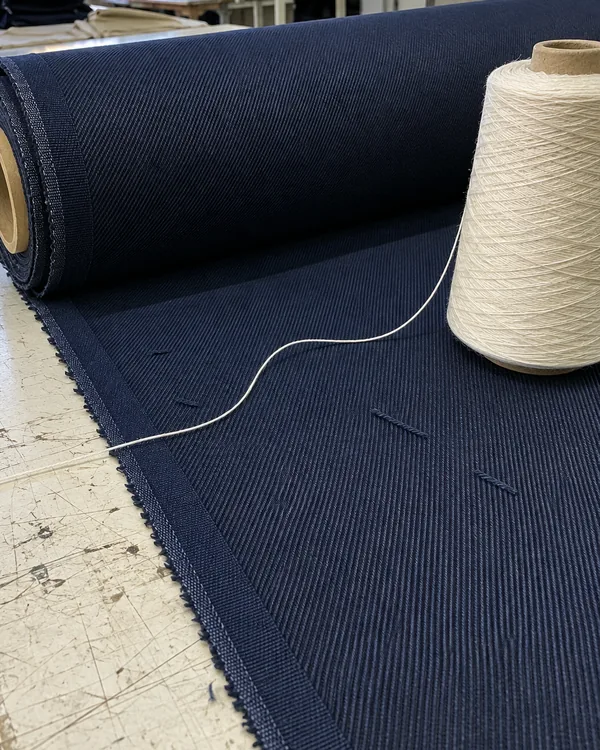
- The yarn certificate: from the yarn maker. It shows what the yarn is, and says nothing about the garment.
- Fabric test reports: from a lab, ideally accredited to ISO/IEC 17025 for that test. A report covers the fabric that was tested, on that date.
- The garment certificate: from a certification body, with the listing, when your program needs NFPA 2112.
- A sample label: so you can check the standard, the edition and the certifier's mark.
- Care instructions: from the fabric maker, so your laundry knows what to do.
Where these rules come from
Read these before you set up a program, and confirm the details with your certification body. CFR is the US Code of Federal Regulations.
- Employer duties. Hazard assessment and PPE, in 29 CFR 1910.132. Legal Information Institute: 29 CFR 1910.132
- Welding. OSHA's letter on FR clothing for welders. OSHA: letter of January 12, 2012
- Electric power work. Arc ratings and FR clothing, in 29 CFR 1910.269 Appendix E. OSHA: 1910.269 Appendix E
- Oil and gas. OSHA's policy on FR clothing in oil and gas well drilling. OSHA: memo of March 19, 2010
- NFPA 2112 tests. An amendment that lists the flame and heat tests. NFPA: amendment to NFPA 2112
- Canada. The withdrawal of CAN/CGSB-155.20. Government of Canada Publications
- Europe. Regulation (EU) 2016/425 on personal protective equipment. EU-OSHA: Regulation (EU) 2016/425
- Claims. What the FTC (Federal Trade Commission) expects before a claim goes out. FTC: advertising substantiation
Questions buyers ask
What is NFPA 2112?
The National Fire Protection Association's standard for FR garments worn where a short flash fire can happen. A garment meets it only once an accredited certification body has tested and listed that model.
Does OSHA approve FR clothing?
No. OSHA does not test, approve or certify garments. Its rules tell employers to assess the hazards and provide the right PPE.
What is an arc rating?
A tested value, in calories per square centimeter, for how a fabric holds up to an electric arc. It comes from an arc test to ASTM F1959, and ASTM F1506 labels show it.
Is HRC 2 the same as CAT 2?
Yes. NFPA 70E replaced HRC (hazard risk category) with PPE Category in 2015. HRC 2 is now PPE Category 2, which needs an arc rating of at least 8 cal/cm².
Can a factory call its garment NFPA 2112 without a certificate?
No. The garment model must be certified and listed by an accredited certification body. Certified fabric or trims alone are not enough.
Is the Canadian standard CAN/CGSB-155.20 still in use?
It was withdrawn in December 2022. Check the date on any document that names it.
Does Sharknits make certified garments?
We make FR workwear to order in aramid. Each order comes with the yarn maker's certificate and a copy of our CE certificate for flame-resistant fabrics (CE is the European product mark). Before we ship, we send you a video of a flame test on your fabric. These cover the yarn and the fabric. Garment certification, where your program needs it, is done by an independent certification body. We confirm with your quote whether it can be done for your order.
Your request is ready
Send it to us on WhatsApp, or copy it into an email to contact@sharknits.com.
Want to talk sooner? Book a 15-minute call on Google Meet.
What happens next
- We reply with questions and a quote.
- We make one sample for you to check.
- You approve it, and we make your order.
contact@sharknits.com · +1 647 501 5424
Sharknits is a custom clothing manufacturer for brands in the US, with factories in Lahore and Sialkot and a US corporate office near Chicago.